AI Isn’t Inspired.
It’s just exploiting creators on an industrial scale

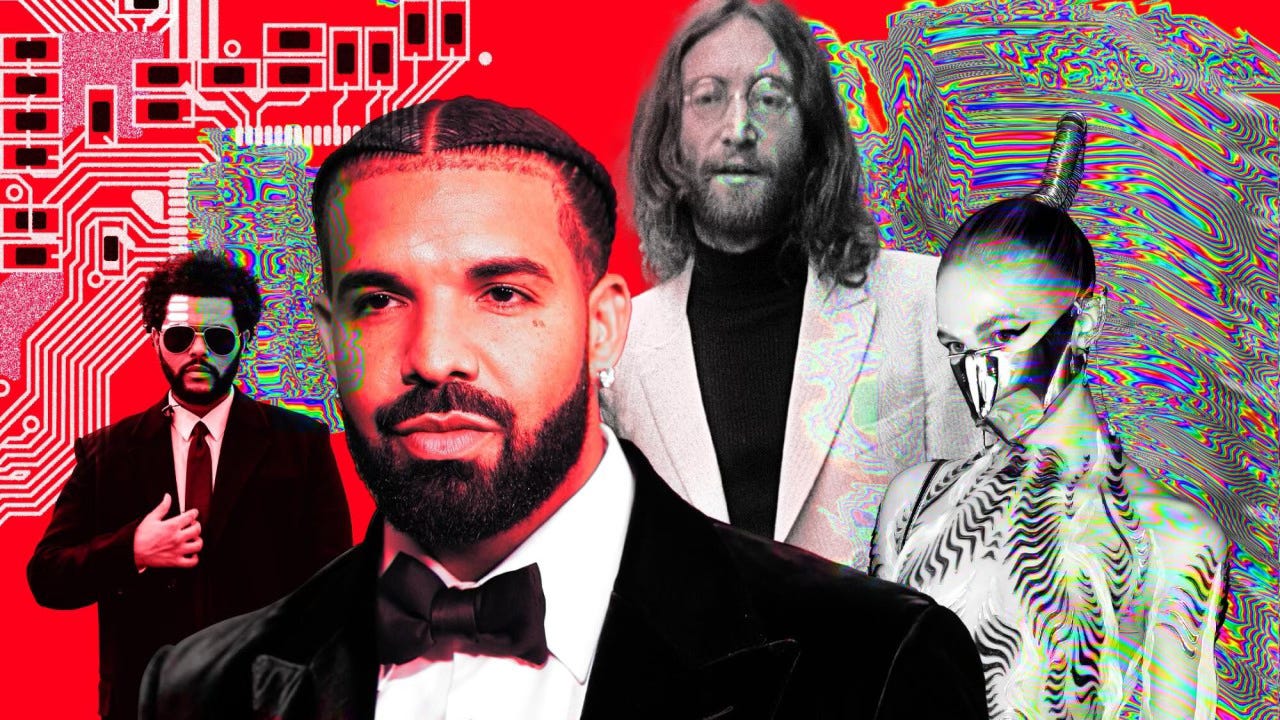
We’ve all seen the argument in defence of AI companies using copyrighted works without compensation to train their LLMs.
The claim?
AI platforms aren’t reproducing those works. They’re simply using them to “inform” or “inspire” a creative process, much like a human might.
To bolster this, some point to examples like a reader in a library, whose own work isn’t tethered to royalties for the authors whose books they have read, or a film student who doesn’t owe directors or producers when their studies lead to an original project.
It’s a compelling analogy on the surface and perfect for hot takes on social media.
But the argument isn’t just flawed; it’s a false equivalency wrapped in convenience.
It’s a talking point designed to absolve AI companies (and their legion of sycophantic defenders) of responsibility while framing their actions as merely the next step in a long creative tradition.
Let me try and break this down; at least as I see it.
The Human-AI Scale is Not Comparable
First, humans and AI systems do not consume creative works in the same way. A human can read a novel, watch a television show or movie, or listen to a song, and while it might spark inspiration, they cannot instantly absorb every book, every screenplay, every melody ever created. Artificial intelligence, by contrast, operates on a scale no human ever could. It ingests billions of pieces of work—copyrighted or otherwise—at speed most of us will never comprehend, building a knowledge base that no single creator, or even all creators combined, could rival.
There’s nothing inspired about it.
Humans are bound by time, access, and attention. AI faces no such limits. It doesn’t skim a book; it processes every sentence. It doesn’t watch a film for its plot; it analyses every shot, script line, and score. The claim that this is equivalent to human inspiration trivialises the reality of what AI systems do when they train on copyrighted content.
AI isn’t inspired by a work…it’s inspired by all works.
The Payment Infrastructure is Already There—AI is Skipping It
When a human consumes creative works—whether reading a book, streaming a movie, or listening to music—there’s an economic exchange.
Libraries pay for books and recorded works. Schools and universities do the same.
Streaming platforms license music and films. Cinemas pay to exhibit. Theatres, arenas and stadiums pay for performances. Even ad-supported services like radio and television networks ensure creators receive royalties, however small.
In every scenario, the creator is compensated, directly or indirectly, for the use of their work.
AI companies, however, have built models by sidestepping this system entirely.
They’re not paying licensing fees to access the books, films, or music they train on. They’re not compensating creators for the value their works add to the AI’s capabilities. Instead, they’re mining the world’s reserve of copyrighted material without acknowledging or paying for the creativity, craft, and sheer labour that went into creating it.
AI is a Platform, Not a Human
There’s another key distinction: humans are end users.
AI companies are platforms and enablers, just like Spotify, Netflix, or a publishing house. Those platforms don’t get a free pass to use copyrighted works because they facilitate creativity; they pay licensing fees to use, distribute, and profit from those works.
AI platforms should be no different.
The idea that AI shouldn’t have to pay because “it’s like a human finding inspiration” conveniently ignores the fact that AI is not a person. It’s a technological product. And when a product derives its value from copyrighted works, the creators of those works deserve compensation. Artificial intelligence companies are creating tools designed to replace human labour and creativity in many cases, and they are monetising those tools. To claim that they don’t owe creators because “humans don’t pay for inspiration” is to obscure the scale and stakes of what’s happening.
Some might argue that AI’s “consumption” of creative works during training is fundamentally different because it doesn’t directly reproduce or distribute those works and it creates something new. The value, this argument goes, lies in the system’s emergent capabilities, not in the individual inputs it consumes.
But this conveniently ignores the fact that those emergent capabilities, which AI companies are all too happy to monetise (ChatGPT is charging up to $US200 per month) are undeniably fuelled by the creative labour of others.
The economic exchange doesn’t disappear just because the output looks different. It’s merely been displaced.
The Ethics of Fair Use and Compensation
Finally, there’s an ethical dimension to this debate. AI companies argue they’re democratising knowledge. But the reality is that they’re monetising it while bypassing the creators whose work fuels their success.
There’s a difference between fair use, which is by and large a US principle anyway, and exploitation, and AI has crossed that line by taking copyrighted material en masse without compensation.
If every other entity in the creative economy, from libraries to streaming services, understands the importance of compensating creators, why should AI be exempt?
Why We Need a New Standard
This is not about stifling innovation. It isn’t. It is about ensuring that innovation doesn’t come at the expense of those who make it possible. If AI companies want to use copyrighted works to train their models, they should pay for the privilege, just as every other platform, service, or user in the creative economy does.
Creativity doesn’t come from thin air. It’s the result of countless hours of human effort, skill, and imagination.
To argue that AI should get a free pass is not only a dismissal of creators but a dangerous precedent that undermines the very system that makes creativity sustainable.
There’s also a certain irony, if not outright hypocrisy, in AI companies refusing to respect or value the work of others while aggressively lobbying and lawyering up to protect their own intellectual property. Does the sanctity of IP only matter when it’s their code or models on the line, as opposed to the work of generations of writers, journalists, artists, producers, directors, actors and musicians that fueled their platforms and systems in the first place.
If we want to encourage innovation, human and machine alike, it starts with valuing the people who create.
Look, I get it: AI isn’t going anywhere, and honestly, I’m just as excited by all it can unlock for creativity in the industries that I work and am passionate for.
But can we just fast-forward to the point where the market, or more likely international courts, because let’s be honest, the US is unlikely to lead the charge, goes back to acknowledging the value in craft and creativity, and that artists and creators deserve to be paid for their work?
From the archives and pre-Substack days.